AGI, Kensington, and Politics
Has it already happened? Is AGI, or rather "superintelligence," here now, with Claude Mythos / Fable? At least in software development, it seems that way to me. And apparently not just to me. Why, you ask?
It started quite innocently. With Kensington.
Kensington
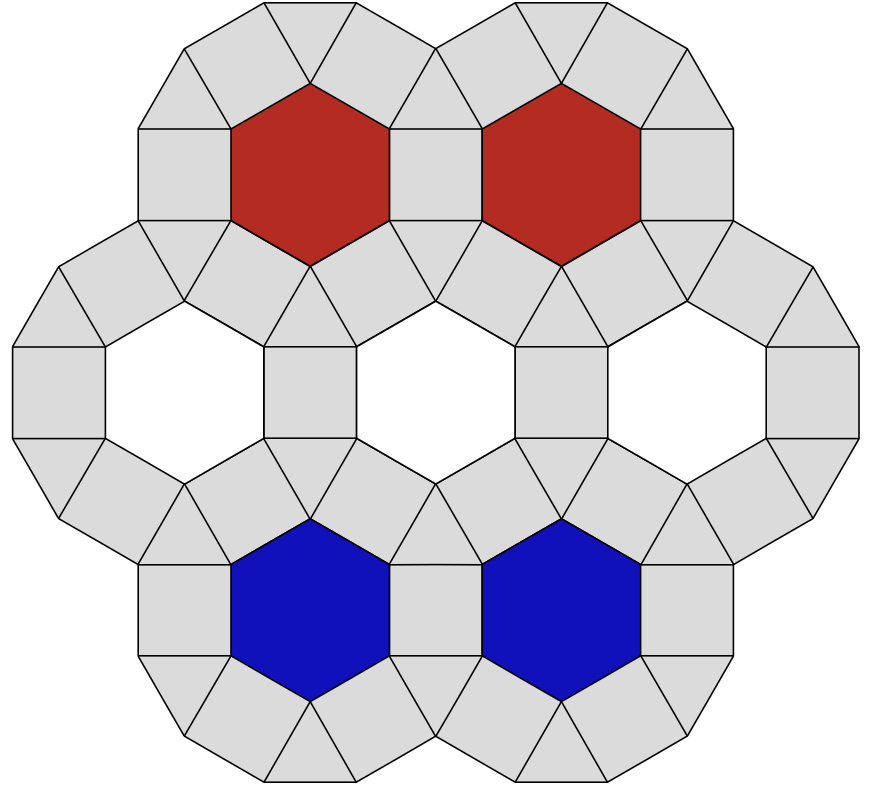
Kensington is a beautifully designed variant of Nine Men's Morris. Each player has 15 stones, which are first placed alternately on intersections of the lines and then moved along the lines. If you occupy a triangle (small mill), you may move one opponent's stone somewhere else; with a square, 2 stones. If you occupy a hexagon of your own or neutral color, you have won.
The game was invented in 1979 and was not a particularly great success. There is an English Wikipedia page, a few board-game-geek pages, a half-finished Github repository. If an LLM can build a Kensington app, then through its own "thinking," not by copying code it learned beforehand.
Besides, the Kensington board is brutally difficult to teach to a computer. Chess or Go are well suited for software. You can map them to two-dimensional arrays, it's easy to talk about coordinates, "move one forward" has a meaning that is simple to program.
Not in Kensington - I have no idea how I would build the game board here. Presumably like the aforementioned Github repo - Kensington GitHub repository - tediously enumerating everything.
Excited about this idea, I wrote a small spec - really minimal: named the Wikipedia page and the board, said I wanted a nice UI and only HTML/CSS/Javascript, and off it went.
Cleanly solved
Claude thought for about 20 minutes and then conjured up this beautiful app:
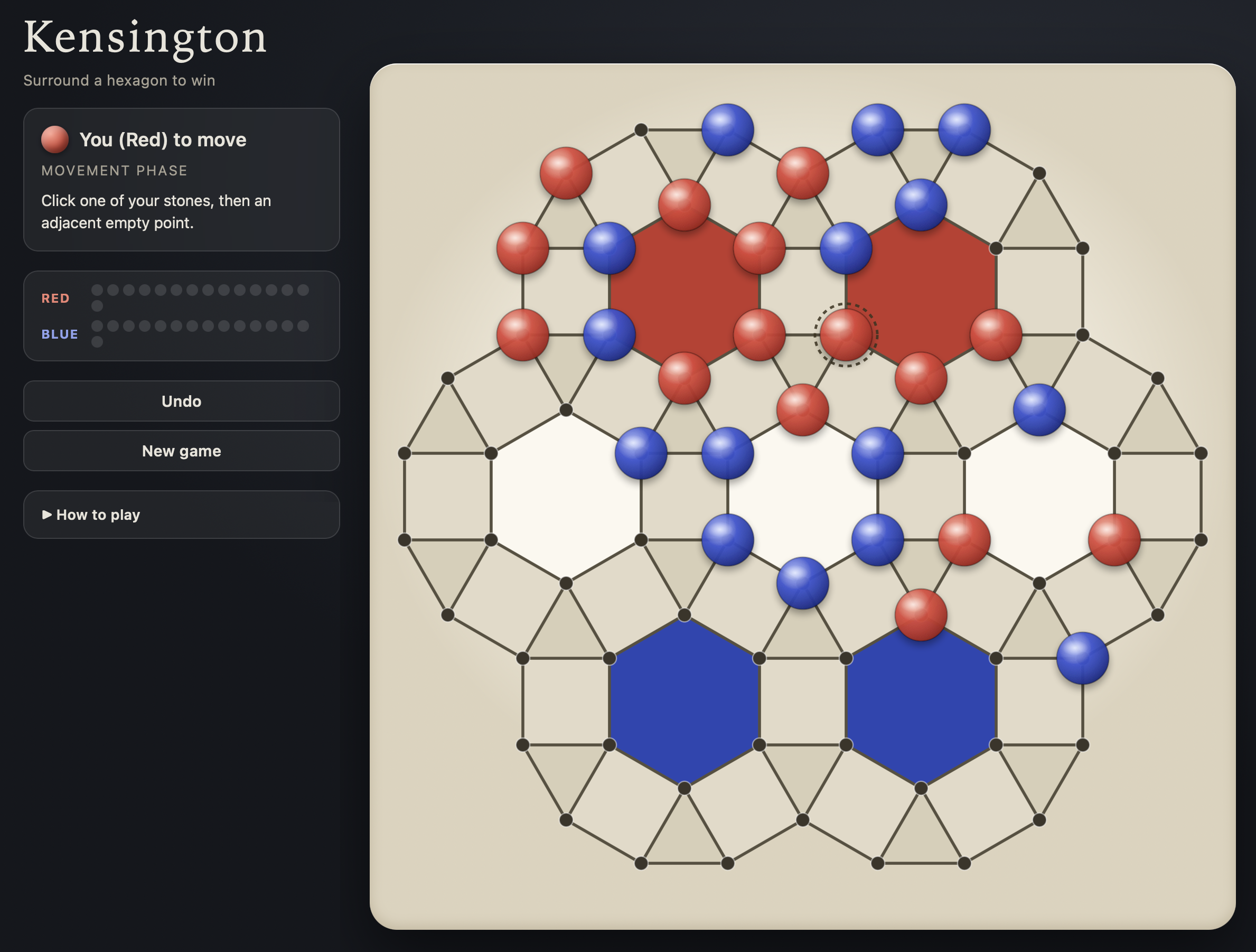
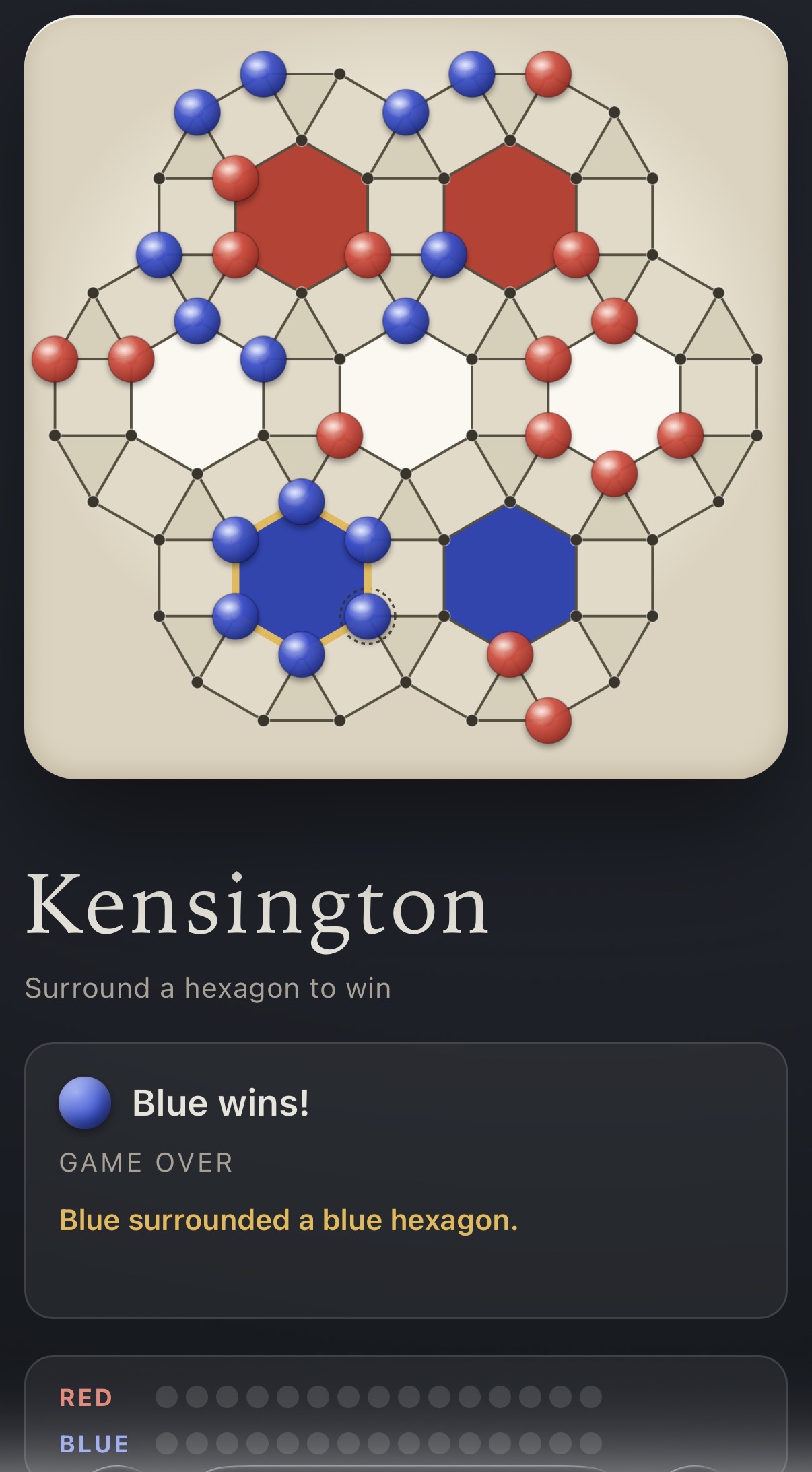
Aside from the fact that, after thinking long and hard as a beginner, I can sometimes beat the AI at the highest level, and I believe a good player could act more purposefully here, in every respect it's perfect. The UI looks good, many details I didn't specify (undo, game rules) are sensible, the UI is perfectly responsive and adapts well to the screen dimensions of the device - something I used to have to teach LLMs with great effort.
Here on my phone:
But the madness, why I have to write a blog post about this, becomes clear in the explanation of what it programmed, and in the code.
The Mysteries of Rhombitrihexagonality
Unlike me, a lowly human, the AI has not only read everything about software development, but also about every other topic on the internet, and understood it, and knows the connections.
So also, for example, Rhombitrihexagonal tiling - a page about rhombitrihexagonal tilings, and how to construct them mathematically. Kensington is apparently such a tiling (which the Wikipedia page briefly mentions).
Fable described its thought process like this:
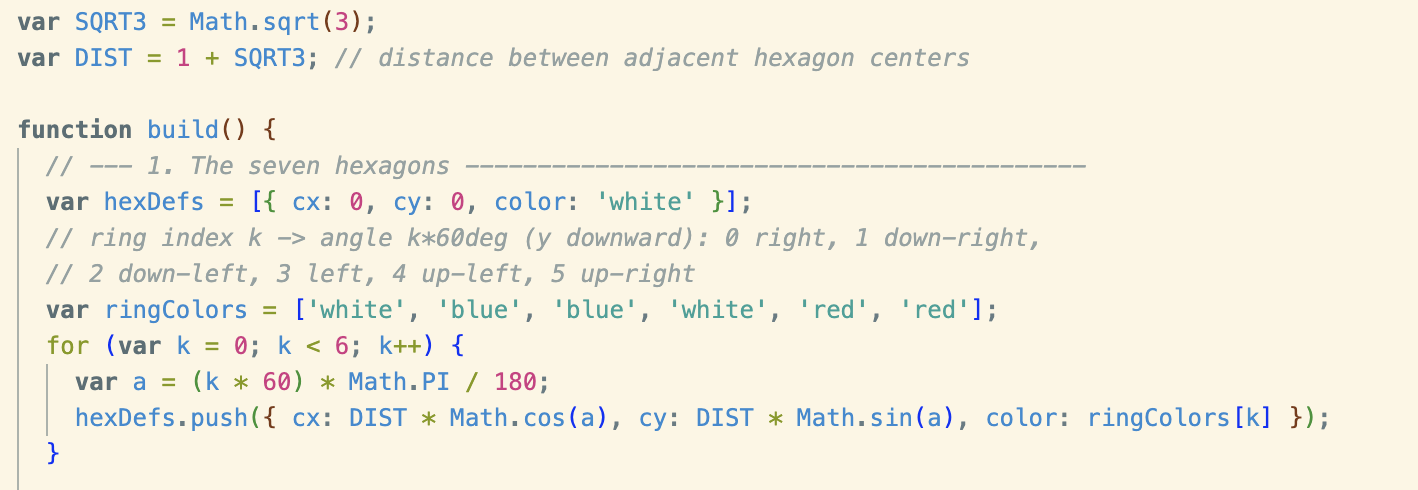
"Visually the board is intricate, but combinatorially it's a clean piece of the 3.4.6.4 rhombitrihexagonal tiling. I verified against your Kensington_board.svg that the seven hexagons form a flower (centers at distance side·(1+√3)), so board.js generates the whole board mathematically: each hexagon gets a "rosette" of 6 edge-squares and 6 corner-triangles, and the union is deduplicated by coordinates."
And then it actually did it. I looked at the coding, and I feel like a junior developer looking at the code of an old hand, like a student in front of the math professor's proof. I understand nothing, but I am impressed by the elegance and brevity of the solution to the problem.
Here is an excerpt:
And just like that, it was gone
The next day I got going again with Claude Code, and the first thing I read was this:
Anthropic writes:
"The US government, citing national security authorities, has issued an export control directive to suspend all access to Fable 5 and Mythos 5 by any foreign national, whether inside or outside the United States, including foreign national Anthropic employees."
Harsh export sanctions on the models for all non-Americans (which had the effect that Anthropic had to completely block access). Is this how the cold AI war begins, primarily between China and the USA, but with everyone else as bycatch?
That is quite dismaying. Here the USA is bluntly leveraging its technological dominance to ensure that it wins the AI race, which apparently is approaching its final stretch. Presumably Anthropic, aware of its upcoming IPO, will implement passport checks so that US Americans continue to have access. We can be curious to see how this develops further.
Update: gave the same task to Opus 4.8 (high)
Result: Opus took about four times as long, had a few bugs in its code that it could detect and fix itself, and at the end created a working implementation from my prompt with a similarly nice UI but with a much weaker engine. It seems that it failed to think enough about a good position evaluation, so it plays random moves until its alpha-beta algorithm detects imminent loss. Not good. Also, unlike Fable's beautiful algorithm to build the board from the underlying mathematical structure, Opus worked like a mere mortal, analyzing the board and storing all coordinates and connections of points and edges. Where Fable is the math professor, Opus is a normal developer.